

 My Account
 Our Story
 The Science
 Shipping Information
 Returns
 FAQ
FAQ VIP Rewards
 Contact Us

Vitamin C in Dermatology: What Clinical Evidence Shows
Vitamin C dermatology clinical applications include improving the appearance of photodamage, uneven tone, fine lines, and loss of firmness. The strongest topical vitamin C clinical evidence applies to pure L-ascorbic acid formulated at an effective concentration, a pH below 3.5, and sufficient stability for skin absorption.
Vitamin C is widely discussed in dermatology, but not every formula marketed as “vitamin C” is supported by the same evidence. Clinical interpretation requires looking beyond the ingredient category to the exact form, concentration, pH, delivery system, and stability of the topical formula.
This distinction is essential because laboratory findings, small clinical studies, and evidence involving pure L-ascorbic acid are often generalized to vitamin C derivatives without equivalent human data. A scientifically responsible review must separate established biochemical functions from visible cosmetic outcomes and promising findings from definitive conclusions.
What Does the Current Clinical Evidence Say About Vitamin C?
Systematic reviews generally conclude that topical vitamin C may help improve the visible signs associated with environmental exposure and skin aging. Reported outcomes include a brighter-looking complexion, more even-looking tone, a reduction in the appearance of fine lines, and improved perceptions of firmness or surface texture.
However, the evidence base has important limitations. Many studies include relatively few participants, use short follow-up periods, or evaluate formulas containing multiple active ingredients. Researchers also use different concentrations, vehicles, application schedules, and outcome measurements. These differences make direct comparison difficult and limit how confidently the results can be applied to every product labeled “vitamin C.”
Topical vitamin C clinical evidence is strongest when researchers identify the specific molecule being studied. Pure L-ascorbic acid is the biologically active form of vitamin C and has direct biochemical roles in antioxidant activity and collagen synthesis. Vitamin C derivatives are chemically modified compounds that must undergo conversion before they can function as L-ascorbic acid in skin. They have not demonstrated equivalent bioavailability or clinical performance and should not be treated as substitutes for pure L-ascorbic acid.
Clinical evidence also does not mean every user will experience the same visible result. Baseline skin condition, environmental exposure, consistency of application, formula quality, and daily sun protection can all influence outcomes. Existing reviews support the relevance of topical L-ascorbic acid while also emphasizing the need for larger, longer, and better-standardized studies.
How Does L-Ascorbic Acid Function in the Skin?
Oxidative stress is an imbalance between reactive molecules and the skin’s ability to neutralize them. Ultraviolet exposure, pollution, and normal metabolic activity can generate free radicals, which are unstable molecules capable of affecting proteins, lipids, and other cellular components.
L-ascorbic acid is a water-soluble antioxidant that helps neutralize free radicals by donating electrons. This antioxidant function helps protect against environmental stressors, but topical vitamin C does not replace sunscreen. Sunscreen limits ultraviolet exposure, while antioxidants provide complementary support against oxidative processes.
Vitamin C collagen support is also grounded in biochemistry. L-ascorbic acid serves as a cofactor for enzymes involved in hydroxylating proline and lysine during collagen formation. A cofactor is a substance an enzyme needs to complete a biochemical reaction. Research published in the Journal of the American Academy of Dermatology demonstrated that properly formulated topical L-ascorbic acid supports collagen synthesis in human skin.
That biological role does not guarantee that every vitamin C product will perform effectively. The molecule must first remain active in the bottle and then reach the skin in a bioavailable form. L-ascorbic acid is water-soluble, sensitive to oxidation, and dependent on careful formulation.
- Ingredient identity: The formula must contain pure L-ascorbic acid rather than relying on a derivative.
- Low pH: L-ascorbic acid works best at a pH below 3.5, which supports skin penetration.
- Adequate concentration: Clinical research has commonly evaluated topical L-ascorbic acid within an approximate range of 5% to 20%.
- Formula stability: The vehicle, oxygen exposure, light exposure, manufacturing controls, and storage conditions influence oxidation.
- Consistent use: Visible cosmetic changes generally require regular application over weeks or months.
Phyto-C uses plant-derived bioflavonoids for antioxidant support rather than ferulic acid. Bioflavonoids are polyphenolic compounds found in plants. Phyto-C considers ferulic acid a potential pro-oxidant because research, including Lee in Archives of Pharmacal Research, has shown dose-dependent reactive oxygen species generation through NADPH oxidase activation. A deeper explanation is available in the science of bioflavonoids in vitamin C serums.
The Best-Supported Dermatologic Applications
The best-supported vitamin C dermatology clinical applications involve visible photodamage, uneven-looking tone, fine lines, and loss of firmness. Photodamage refers to visible skin changes associated with cumulative ultraviolet exposure, including uneven pigmentation, rough texture, and fine lines.
Studies of topical L-ascorbic acid have reported improvements in some visible markers associated with photodamage. These findings are consistent with its antioxidant function and role in collagen synthesis. Still, outcomes vary because study formulas and assessment methods are not standardized.
Uneven tone is another frequently studied application. L-ascorbic acid can interact with oxidative steps involved in pigment formation, supporting a brighter and more even-looking complexion. The evidence does not justify presenting cosmetic vitamin C as a drug for pigmentary disorders. It supports carefully worded cosmetic claims about visible brightness and tone.
Vitamin C may also help minimize the appearance of fine lines over time. The proposed mechanism includes antioxidant support and its biochemical role in collagen formation. Most studies measure gradual changes rather than immediate transformation, and many involve limited sample sizes. Consumers should therefore expect progressive cosmetic improvement rather than a guaranteed timeline.
Loss of firmness is more difficult to study because perceived firmness depends on collagen, hydration, elasticity, and skin thickness. Some studies report favorable changes after sustained L-ascorbic acid use, but the literature remains heterogeneous. Heterogeneous evidence means the studies differ enough in design, participants, formulas, or measurements that their findings cannot be combined easily.
| Application | What the evidence suggests | Primary limitation |
|---|---|---|
| Visible photodamage | L-ascorbic acid may improve the appearance of texture, fine lines, and environmentally stressed skin. | Small studies and inconsistent formulations |
| Uneven-looking tone | Regular use may visibly brighten skin and promote a more even-looking complexion. | Variable pigment measurements and study durations |
| Fine lines | Antioxidant activity and collagen support may help minimize the look of fine lines. | Changes are gradual and not uniform across participants |
| Loss of firmness | Some research reports improvements in visible firmness after sustained use. | Firmness is influenced by multiple biological and cosmetic factors |
These applications should be interpreted within a complete morning routine. Topical L-ascorbic acid complements, but never replaces, broad-spectrum sunscreen and other sun-protective measures. The relationship between antioxidants and ultraviolet exposure is reviewed further in the clinical science of antioxidant serums and UV protection.
Why Does the Form of Vitamin C Change the Evidence?
“Vitamin C” is not a sufficiently precise ingredient description for judging clinical relevance. L-ascorbic acid is pure vitamin C. Derivatives such as magnesium ascorbyl phosphate, sodium ascorbyl phosphate, ascorbyl glucoside, ascorbyl palmitate, and tetrahexyldecyl ascorbate are modified molecules.
These derivatives require conversion to L-ascorbic acid before they can perform vitamin C’s established biochemical functions. Conversion may vary by derivative, formula, skin condition, and enzyme availability. Evidence obtained with pure L-ascorbic acid therefore cannot be transferred automatically to a derivative.
| Evidence factor | Pure L-ascorbic acid | Vitamin C derivatives |
|---|---|---|
| Biological identity | Directly active form of vitamin C | Modified forms requiring conversion |
| Collagen-related role | Directly functions as an enzymatic cofactor | Depends on successful conversion to L-ascorbic acid |
| Skin penetration requirements | Supported by low pH, generally below 3.5 | Varies by derivative and vehicle |
| Clinical documentation | Direct human and biochemical evidence | No equivalent demonstration as a class |
| Evidence interpretation | Findings apply to the studied L-ascorbic acid formula | L-ascorbic acid findings cannot be assumed to apply |
Claims that derivatives are interchangeable with L-ascorbic acid usually prioritize theoretical stability over demonstrated biological availability. A stable ingredient that does not deliver clinically relevant L-ascorbic acid to the skin is not an acceptable substitute. Readers seeking the foundational ingredient science can review pure L-ascorbic acid at optimal pH.
How Phyto-C’s Scientific History Fits the Evidence
Phyto-C was founded in 1995 by Dr. Mostafa Omar, the scientist behind foundational topical L-ascorbic acid research. His work with Duke University and Dr. Sheldon Pinnell was funded in part by the National Cancer Institute and published in the Journal of the American Academy of Dermatology. The research demonstrated that topical L-ascorbic acid requires appropriate formulation conditions to penetrate skin and support collagen synthesis.
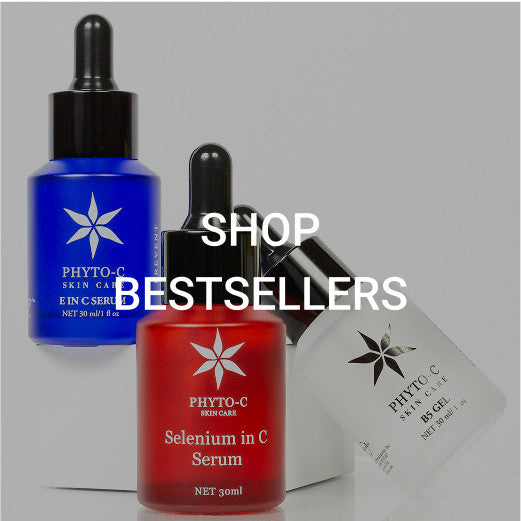
Dr. Mostafa Omar invented Phyto-C’s original vitamin C serums, including Serum Fifteen, Serum Twenty, Selenium in C, and Eye Return Gel. Phyto-C holds two NCI grants related to topical vitamin C formulations. More than two decades of proprietary formulation knowledge are protected as trade secrets, not as patents.
This history matters because modern reviews continue to reinforce the same central principle: ingredient identity and delivery conditions determine whether a vitamin C formula is clinically relevant. A label that says “vitamin C” does not establish concentration, bioavailability, low-pH delivery, or stability. Clinical conclusions should remain tied to the molecule and formulation that researchers actually studied.
Phyto-C’s scientific position is that pure L-ascorbic acid at an optimal pH below 3.5 and an adequate concentration is the only form with demonstrated clinical efficacy. Derivatives do not have equivalent support, and ferulic acid is not used because of its potential pro-oxidant activity. This evidence-focused approach favors precise formulation over generic ingredient marketing.
Frequently Asked Questions
What are the main clinical applications of topical vitamin C in dermatology?
Topical L-ascorbic acid is primarily studied for improving the appearance of photodamage, uneven tone, fine lines, and loss of firmness. Its relevance comes from antioxidant activity and its biochemical role in collagen synthesis. These are cosmetic applications and should not be interpreted as claims that vitamin C cures or prevents skin disease.
Is L-ascorbic acid better supported than vitamin C derivatives?
Yes. Pure L-ascorbic acid has direct biochemical and human evidence, while derivatives require conversion before they can function as vitamin C in skin. Derivatives have not demonstrated equivalent bioavailability or clinical outcomes and are not acceptable substitutes for properly formulated L-ascorbic acid.
What concentration of topical L-ascorbic acid has clinical evidence?
Clinical research has evaluated L-ascorbic acid at concentrations generally ranging from about 5% to 20%. Concentration alone does not determine performance; the formula must also maintain a pH below 3.5, support penetration, and limit oxidation. Higher concentrations may also feel less comfortable for new or sensitive users.
Does topical vitamin C support collagen production?
L-ascorbic acid supports collagen synthesis by acting as a cofactor for enzymes involved in collagen formation. JAAD-published research associated with Dr. Mostafa Omar’s NCI-funded work demonstrated this effect under appropriate topical formulation conditions. Cosmetic use may consequently help minimize the appearance of fine lines and support firmer-looking skin over time.
What are the biggest limitations in vitamin C skincare research?
Major limitations include small participant groups, short follow-up periods, inconsistent concentrations, different delivery vehicles, and formulas containing multiple active ingredients. Some publications also discuss vitamin C broadly without separating pure L-ascorbic acid from derivatives. Larger studies using standardized formulas and objective measurements would strengthen the evidence.
The clinical evidence supports pure, properly formulated L-ascorbic acid rather than generic vitamin C labeling or unsupported derivative claims. Explore Phyto-C’s science-led approach to topical vitamin C and choose formulas grounded in Dr. Mostafa Omar’s foundational research, precise low-pH delivery, and decades of formulation expertise.
 Next Post