
 My Account
 Our Story
 The Science
 Shipping Information
 Returns
 FAQ
FAQ VIP Rewards
 Contact Us

Vitamin C and Retinol Together: The Ingredient Science
Few ingredient combinations generate more debate than vitamin C and retinol together in the same skincare routine. The concern has circulated for years across dermatology offices and online forums alike: that these two actives are chemically incompatible, that one deactivates the other, or that layering them causes more harm than benefit. The science tells a more nuanced story — and understanding it changes how you approach your routine entirely.
Why This Pairing Divides Dermatologists and Formulators
The skepticism around combining L-ascorbic acid and retinol did not emerge from nowhere. It originated primarily from concerns about pH: L-ascorbic acid requires a low-pH environment to remain stable and penetrate effectively, and some early formulation literature suggested that acidic conditions could accelerate oxidation of retinol. That observation — technically accurate in isolated in vitro settings — was extrapolated into a blanket warning that the two should never be used together.
The distinction that matters is this: the debate is about formulation context and application sequencing, not inherent chemical incompatibility between the two molecules. Retinol and L-ascorbic acid do not react with each other to form harmful byproducts. The question is whether their optimal working conditions conflict enough to reduce efficacy — and the answer depends heavily on how and when they are applied. As we will examine, skin's own buffering behavior resolves much of the concern within minutes of application.
The pH Problem: How L-Ascorbic Acid and Retinol Behave at Different pH Levels
L-ascorbic acid requires a formulation pH between 2.5 and 3.5 to remain stable in solution and to penetrate the stratum corneum effectively. Above pH 4.0, its ability to enter the skin drops significantly. This is why the pH of a vitamin C serum is one of the most important variables determining whether it actually works.
Retinol, by contrast, is pH-neutral. It does not require an acidic environment to function, and it does not itself chemically degrade L-ascorbic acid. However, highly acidic environments can accelerate retinol's own oxidation over time — a nuance that is relevant at the formulation level but far less significant during a brief, sequenced application on skin. The practical takeaway: retinol is not the enemy of vitamin C, and vitamin C is not the enemy of retinol. The conflict, such as it is, exists primarily in poorly designed single-formula combinations or in simultaneous mixing outside the skin.
| Active | Optimal pH Range | Skin Penetration Window | Stability Risk |
|---|---|---|---|
| L-Ascorbic Acid | 2.5 – 3.5 | Rapid at low pH; drops above 4.0 | Oxidation in high pH or UV exposure |
| Retinol | 5.0 – 7.0 (neutral) | Broad; not pH-dependent | Oxidation in strongly acidic environments or light exposure |
| Standard moisturizer vehicle | 4.5 – 6.0 | Carrier-dependent | Minimal for most actives |
What Actually Happens When Both Actives Contact Skin Simultaneously
Skin is not a passive surface. The stratum corneum has a natural buffering capacity, and surface pH — which typically sits between 4.5 and 5.5 — begins reasserting itself within minutes of a low-pH product being applied. This means that even when a vitamin C serum with a pH of 3.0 is applied, the skin's surface is already beginning to neutralize toward its baseline within five to ten minutes.
This buffering behavior is clinically meaningful. By the time a retinol product is applied after a vitamin C serum — assuming even a short absorption window — the pH environment on the skin's surface has already shifted considerably. The window of potential pH conflict is narrow and transient. In vitro destabilization studies, which are conducted in static liquid solutions rather than on living skin with active buffering, do not accurately replicate this dynamic.
The practical conclusion from this: sequenced layering — not simultaneous mixing — is the approach that resolves any theoretical concern about pH conflict. Applied correctly, the two actives occupy different temporal and spatial phases of absorption. Understanding how to layer antioxidants strategically is what separates an effective routine from an ineffective one.
The Antioxidant Case for Using Both in the Same Routine
Beyond compatibility, there is a strong affirmative case for combining these two actives. They operate through entirely different mechanisms — and those mechanisms are complementary in ways that benefit skin's long-term appearance and resilience.
L-ascorbic acid functions as a direct free-radical scavenger. It intercepts reactive oxygen species before they can cause oxidative damage to lipids, proteins, and DNA in skin cells. It also serves as an essential cofactor in the hydroxylation of proline and lysine residues during collagen synthesis — a biochemical role that supports the structural integrity of the dermis over time.
Retinol works downstream. It accelerates cellular turnover at the epidermal level, helping the skin cycle through cells more efficiently and visibly improving the look of texture, tone, and fine lines with consistent use. It also supports procollagen production through a separate signaling pathway. Vitamin C's cofactor role in collagen synthesis and retinol's upregulation of procollagen represent additive — not redundant — mechanisms for supporting a firmer, more even-looking complexion.
The foundational science behind Phyto-C's L-ascorbic acid formulations was developed by Dr. Mostafa Omar in NCI-funded research published in the Journal of the American Academy of Dermatology. That work established the critical parameters — concentration, pH, and stabilization strategy — that make topical vitamin C clinically effective. Combining that science with retinol represents a logical extension of the same evidence-based framework.
How to Layer Vitamin C and Retinol Correctly: A Protocol-Based Approach
There are two validated approaches to combining these actives, and the right one depends on your skin's current tolerance.
Option A — AM/PM Split: Apply your L-ascorbic acid serum in the morning, where it also supports photoprotection by helping neutralize UV-generated free radicals before they cause oxidative damage. Apply retinol at night, avoiding any UV exposure conflict and allowing the skin's full repair cycle to work without daytime stressors. This is the most conservative and most broadly appropriate approach.
Option B — Sequential Evening Layering: Apply your vitamin C serum first and allow ten to fifteen minutes for full absorption. Follow with your retinol product. The absorption window allows skin's buffering to reduce the pH gap, and each active has sufficient time to begin penetrating before the next is introduced. This protocol is appropriate for experienced users with well-acclimated skin.
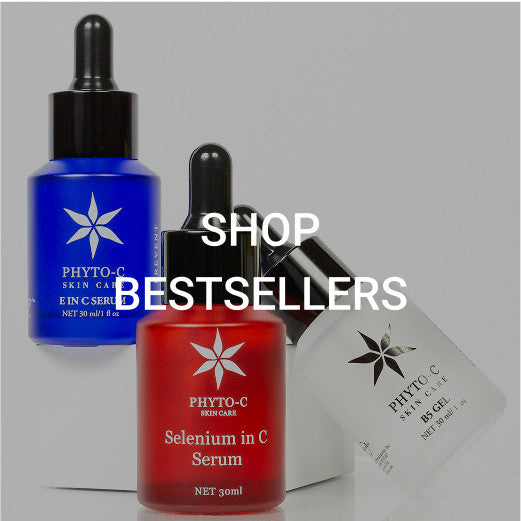
For those who prefer a single-formula approach, two products in the Phyto-C catalog combine both actives at clinical concentrations. SuperHeal O-Live Serum delivers 15% L-ascorbic acid alongside 1% retinol, 1% vitamin E, olive leaf extract, alpha-arbutin, and kojic acid in one multi-active treatment serum. Selenium in C Serum combines 15% L-ascorbic acid with 1% retinol, 1% vitamin E, and 1% selenium (L-selenomethionine) — a triple antioxidant system with added retinol benefit. Both formulas reflect a deliberate formulation decision: at the concentrations used and with the stabilization approach applied, the combination is efficacious and well-tolerated by the majority of users. For a deeper look at the multi-active rationale behind the O-Live Serum, see this full breakdown of its formulation science.
Who Should Be Cautious: Skin Types and Conditions That Warrant Modified Protocols
Not every skin type should approach this combination the same way. Sensitive or compromised-barrier skin should not begin with both actives simultaneously. Start with a lower-concentration vitamin C serum — E in C Lite, which delivers 10% L-ascorbic acid alongside 5% vitamin E, is designed specifically for reactive skin and vitamin C beginners. Allow the skin to fully acclimate to vitamin C before introducing retinol into the routine. E in C Lite's formulation for sensitive skin is discussed in detail in a dedicated guide.
Retinol-naive users should acclimate to retinol alone for four to six weeks before combining it with any high-concentration vitamin C serum. This allows the skin to build tolerance to retinol's cellular effects before adding the additional variable of a low-pH active. Understanding how retinol works and who should use it is a useful starting point for anyone new to this ingredient.
Signs that a protocol adjustment is warranted include persistent tightness that does not resolve within the first two weeks, visible flaking that exceeds normal retinol adjustment, or increased sensitivity to other products in the routine. Any of these is a signal to revert to the AM/PM split and reduce application frequency before attempting sequential layering again.
Frequently Asked Questions
Does vitamin C deactivate retinol when applied together?
No. L-ascorbic acid and retinol do not chemically deactivate each other. The concern is about pH compatibility at the formulation level, not molecular inactivation. When applied sequentially on skin — with an absorption window between products — the skin's natural buffering capacity reduces any pH conflict within minutes. Products like SuperHeal O-Live Serum are specifically formulated to deliver both actives together at clinical concentrations.
Which should I apply first — vitamin C serum or retinol?
Apply vitamin C serum first. L-ascorbic acid requires a low-pH environment to penetrate effectively, and it should be applied to clean, dry skin before any other active. Allow ten to fifteen minutes for absorption, then apply retinol. This sequencing respects each active's optimal delivery conditions and minimizes potential pH interference.
Can I use a single serum that contains both vitamin C and retinol?
Yes, when the formulation has been developed to accommodate both actives at appropriate concentrations and with effective stabilization. Phyto-C's SuperHeal O-Live Serum contains 15% L-ascorbic acid and 1% retinol in a single multi-active formula. Selenium in C Serum also combines both actives. Single-formula approaches simplify the routine and eliminate sequencing variables for experienced users.
Is it safe to use vitamin C and retinol together every day?
For most skin types, yes — once both actives have been individually acclimated. The AM/PM split protocol (vitamin C in the morning, retinol at night) is the most broadly appropriate daily approach and minimizes any risk of sensitivity. Users with sensitive or reactive skin should start with lower concentrations of both actives and build frequency gradually over several weeks.
Does retinol make L-ascorbic acid unstable in the bottle?
Retinol does not destabilize L-ascorbic acid in a properly formulated product. Stability risks for L-ascorbic acid come primarily from oxygen exposure, elevated temperature, and high pH — not from the presence of retinol. In Phyto-C formulations, bioflavonoids are used to support antioxidant stability without the pro-oxidant risk associated with ferulic acid, which research has shown can generate reactive oxygen species via NADPH oxidase activation.
The science behind using vitamin C and retinol together is clear: these actives are complementary, not conflicting, when applied with the right protocol or in a formulation designed to deliver both effectively. Phyto-C's approach to combining L-ascorbic acid and retinol is grounded in decades of formulation science — explore SuperHeal O-Live Serum or browse the full Phyto-C catalog to find the formulation that fits your skin's current needs.
 Next Post