

 My Account
 Our Story
 The Science
 Shipping Information
 Returns
 FAQ
FAQ VIP Rewards
 Contact Us

Why I Think the Industry Is Wrong About Vitamin C Stability
After decades of formulating with pure L-ascorbic acid, I believe the industry treats vitamin C stability as a packaging problem when it is fundamentally a chemistry problem. pH control alone is insufficient. The real variables are metal chelation, antioxidant synergy, and rigorous accelerated aging validation — and most brands skip at least two of these.
Everyone Talks About Stability — Almost No One Understands It
The conversation around vitamin C serum stability formulation science has been dominated by a remarkably simplistic narrative for over two decades. Keep the pH low. Add ferulic acid. Put it in a dark glass bottle. This is what passes for stability strategy in much of the industry, and in my view, it is incomplete and in some cases actively counterproductive.
Most brands treat stability as a packaging or marketing problem — something solved by opaque bottles and reassuring label copy. But L-ascorbic acid degradation is a chemical cascade with multiple failure points, and addressing only one of them while ignoring the others does not produce a stable formula. It produces a formula that appears stable long enough to ship. That distinction matters enormously to the person applying it to their skin every morning.
I have spent the better part of my career formulating with pure L-ascorbic acid — not derivatives, not stabilized esters, but LAA at optimal concentrations and pH. I have seen formulas fail in ways that the standard industry playbook cannot explain, because the playbook does not account for what actually drives oxidation at the molecular level.
What Does the Data Show About the Actual Oxidation Cascade?
L-ascorbic acid does not simply "go bad." It degrades through a well-characterized two-stage oxidation cascade. In the first stage, LAA loses a single electron to form the ascorbyl radical — a relatively reversible step. In the second stage, the ascorbyl radical loses a second electron to form dehydroascorbic acid (DHAA), which then undergoes irreversible hydrolysis to diketogulonic acid and other breakdown products. Once you reach diketogulonic acid, there is no recovery. The active molecule is gone.
Understanding ascorbic acid degradation pH dynamics is critical here. Lowering the pH below 3.5 slows the first stage of this cascade by protonating the ascorbate ion and reducing its susceptibility to electron loss. This is real chemistry and it works — but it does not prevent the second stage. The industry has conflated "slowing" with "solving," and the distinction has real consequences for product efficacy over time.
What most formulators underestimate — or ignore entirely — is the role of trace metal contamination. Copper and iron ions catalyze ascorbyl radical formation at concentrations as low as parts per million. These metals are ubiquitous: they leach from manufacturing equipment, exist in water supplies, and contaminate raw materials. A formula can have textbook-perfect pH and still degrade rapidly if trace metals are not controlled at the manufacturing stage. Most manufacturing processes do not control for this. I find that remarkable.
Why Are Chelation and Antioxidant Synergy the Real Variables?
If pH control addresses only the first half of the L-ascorbic acid oxidation mechanism, the question becomes: what addresses the rest? In my formulation work, two factors have proven decisive — antioxidant synergy and metal chelation.
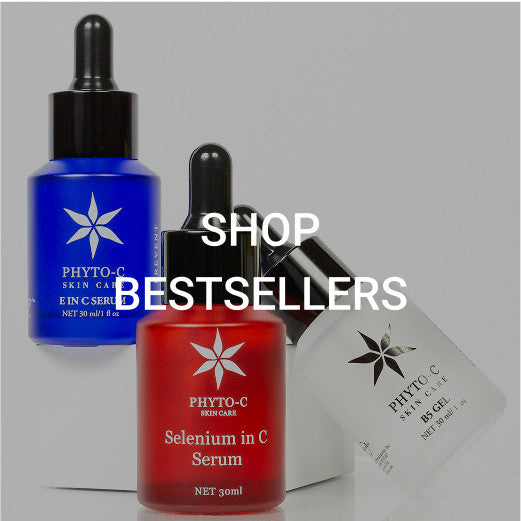
Vitamin E (alpha-tocopherol) regenerates the ascorbyl radical back to intact ascorbic acid by donating a hydrogen atom. This is not theoretical. It is a well-documented redox cycle, and it is the mechanistic basis behind my E in C Advanced and E in C Lite formulations. By including tocopherol at the correct ratio and in a compatible vehicle, you create a system that actively recycles the ascorbyl radical before it can progress to irreversible DHAA formation. This extends both the functional life of the product and its efficacy on the skin.
Bioflavonoids contribute additional electron-donor capacity and, critically, metal chelation. They bind free copper and iron ions, removing them from the catalytic cycle that initiates radical formation in the first place. This addresses the trace-metal problem that pH alone cannot solve.
Then there is ferulic acid. I am aware that it is widely cited as a vitamin C stabilizer, largely based on the Duke patent and subsequent SkinCeuticals formulations. I have never used it. Lee's 2005 research in the Archives of Pharmacal Research demonstrated that ferulic acid can generate reactive oxygen species through NADPH oxidase-mediated pathways. Under UV exposure — the exact conditions in which you want your antioxidant serum to perform — ferulic acid introduces its own radical species. I consider this a pro-oxidant risk, and I have consistently declined to accept it in any formula bearing my name. I know this contradicts industry consensus. The data supports my position.
What Do I Do Differently in the Phyto-C Lab?
My approach to how to stabilize vitamin C serum starts at the manufacturing stage, not the formulation stage. I use chelating agents during production to sequester trace metals before they can initiate the oxidation cascade. By the time active ingredients are combined, the catalytic trigger for radical formation has already been addressed. This is not common practice in the industry, and it should be.
My alcohol-free serums — Serum Fifteen and Serum Twenty — are formulated at rigorously controlled low pH with bioflavonoids serving dual roles as antioxidant synergists and chelators. There is no ferulic acid. There are no unnecessary co-solvents. Every ingredient has a defined function in the stability system or on the skin. Nothing is included for label appeal.
Perhaps most importantly, I validate stability through accelerated aging protocols — exposing formulas to elevated temperatures and controlled light conditions that simulate months of real-world storage in compressed timeframes. A formula that looks stable at six weeks can fail catastrophically at three months under actual consumer storage conditions. I have seen this happen with competitor products, and I have seen it happen with my own early prototypes. Accelerated aging is the only honest way to know whether your vitamin C serum formulation challenges have actually been solved or merely postponed.
Frequently Asked Questions
If ferulic acid is so widely used, why do you consider it a risk in vitamin C formulas?
In my view, the popularity of ferulic acid in vitamin C serums is driven more by a single patent than by comprehensive safety data. Lee (2005) demonstrated NADPH oxidase-mediated reactive oxygen species generation from ferulic acid. Under UV exposure — precisely the conditions where antioxidant protection matters most — this creates a pro-oxidant risk that I am unwilling to introduce into my formulations.
Does a vitamin C serum turning slightly yellow mean it has already degraded?
Not necessarily, but it is not irrelevant either. A faint yellow tint in a fresh L-ascorbic acid serum can reflect the normal color of ascorbic acid in solution at low pH. However, progressive darkening toward amber or brown indicates accumulation of dehydroascorbic acid and diketogulonic acid — irreversible degradation products. From my experience, if the color change is accompanied by a shift in odor, the formula has failed.
Is there a meaningful stability difference between 15% and 20% L-ascorbic acid concentrations?
Yes. Higher concentrations of L-ascorbic acid generate proportionally more ascorbyl radical under identical conditions, which increases the demand on any stabilizing system. A formula that is stable at 15% may not be stable at 20% unless the chelation and antioxidant synergy systems are scaled appropriately. This is one reason I formulate Serum Fifteen and Serum Twenty as distinct products with individually optimized systems, not simply different concentrations of the same base.
Why don't you use vitamin C derivatives like ascorbyl glucoside or sodium ascorbyl phosphate?
The bioavailability data for vitamin C derivatives is weak. These compounds must be enzymatically converted to free L-ascorbic acid in the skin, and the conversion rates documented in the literature are insufficient to deliver meaningful concentrations at the target site. I formulate exclusively with pure LAA because the direct activity data supports it. Derivatives solve a stability problem by sacrificing efficacy, and I do not consider that an acceptable trade-off.
How should I store my vitamin C serum to maximize its shelf life?
Store it in a cool, dark environment — ideally below 25°C and away from direct sunlight. Refrigeration is acceptable and can slow oxidation, though a well-formulated product should not require it. The most important factor is minimizing air exposure: reseal the product immediately after each use. In my view, storage conditions matter, but they cannot rescue a formula that was not properly stabilized during manufacturing.
Conclusion
Vitamin C stability is not a packaging problem, a single-ingredient solution, or a marketing story — it is a multi-variable formulation challenge that demands rigor at every stage from manufacturing through accelerated aging validation. If you are serious about what you put on your skin, I invite you to explore the Phyto-C product line and see what science-first formulation actually looks like.
 Next Post