
 My Account
 Our Story
 The Science
 Shipping Information
 Returns
 FAQ
FAQ VIP Rewards
 Contact Us

Retinol in Skincare: How It Works and Who Should Use It
Retinol in skincare has earned its reputation as one of the most extensively studied and effective ingredients available without a prescription. Whether you're noticing the first signs of fine lines, dealing with uneven skin tone, or looking for a way to refine texture and pores, retinol delivers measurable visible results — when formulated correctly and used with care. This guide covers how retinol works, which concentration is right for your skin, and how to build it into a routine that actually works.
What Is Retinol and How Does It Work?
Retinol is a form of vitamin A — a fat-soluble nutrient that plays a fundamental role in cellular communication. When applied topically, retinol undergoes a two-step enzymatic conversion within the skin: first to retinaldehyde, then to retinoic acid. Retinoic acid is the biologically active form that binds to nuclear retinoic acid receptors (RARs and RXRs), directly influencing gene expression in keratinocytes and fibroblasts.
This gene-level activity is what makes retinol uniquely powerful. Published research associates topical retinol use with support for the skin's natural collagen production processes, promotion of healthy epidermal renewal, and improvement in the way skin cells mature and shed — a process known as keratinization. These three mechanisms are the foundation of retinol's well-documented ability to help improve the appearance of fine lines, uneven tone, and congested pores.
It's important to distinguish over-the-counter retinol from prescription tretinoin (all-trans retinoic acid). Tretinoin is already in its active form and works immediately upon application, which makes it potent but also more irritating. Retinol converts gradually, allowing the skin to modulate the process. This slower conversion makes retinol better tolerated in well-formulated cosmetic products while still delivering meaningful visible improvements over time.
Phyto-C's retinol formulations are developed under the scientific direction of Dr. Mostafa Omar, whose research on topical antioxidants — supported by two grants from the National Cancer Institute (NCI) and published in the Journal of the American Academy of Dermatology (JAAD) — informs every product in the line. This research-driven approach ensures that retinol is stabilized and paired with complementary antioxidants for optimal performance.
Clinically Documented Benefits of Retinol in Skincare
Decades of peer-reviewed research support the visible benefits of consistent retinol use. Here are the core outcomes you can expect:
- Helps reduce the appearance of fine lines and wrinkles. Research associates retinol with support for collagen types I and III in the dermis, helping to maintain the structural appearance that gives skin its firmness and resilience.
- Helps fade the look of hyperpigmentation and post-inflammatory marks. By promoting healthy cell renewal at the surface, retinol helps bring fresher, more evenly pigmented skin to the surface while promoting a more even-looking complexion.
- Helps promote a clearer-looking complexion for congestion-prone skin. Retinol is associated with supporting healthy sebum balance and follicular function, making it especially relevant for acne-prone and congestion-prone skin types seeking to minimize the appearance of clogged pores.
- Visibly improves overall skin texture, tone, and radiance. Most users observe meaningful visible changes with consistent use over 8 to 12 weeks.
Retinol Concentration Guide: What Level Do You Need?
Choosing the right retinol concentration depends on your skin's experience with the ingredient, your concerns, and your tolerance. Here's a practical breakdown:
0.25%–0.5% (Beginner Range): This is the ideal starting point for first-time retinol users, those with sensitive skin, and anyone focused on maintenance rather than aggressive correction. Retinol 0.5% from Phyto-C sits at the top of this range, formulated with hyaluronic acid to support hydration while retinol does its work. Active Advanced also contains 0.5% retinol combined with a multi-acid complex (mandelic, azelaic, salicylic, glycolic, and lactic acids) for those who want both retinol and exfoliation in one step. Both are effective enough to deliver visible results without overwhelming the skin's tolerance threshold.
0.5%–1% (Intermediate to Advanced): Experienced retinol users targeting deeper wrinkles or more significant pigmentation concerns may benefit from higher concentrations. SuperHeal O-Live Serum includes 1% retinol alongside 15% L-ascorbic acid, vitamin E, olive leaf extract, alpha-arbutin, and kojic acid — making it a multi-active approach for those whose skin can tolerate a more intensive formulation. Similarly, Selenium in C Serum pairs 1% retinol with 15% L-ascorbic acid, vitamin E, and selenium for a triple antioxidant system.
Higher is not always better. Delivery system, vehicle formulation, and the presence of supporting ingredients determine efficacy far more than concentration alone. A well-formulated 0.5% retinol will outperform a poorly stabilized 1% product every time.
For periodic resurfacing rather than daily use, SuperHeal O-Live Mask combines retinol with glycolic acid, lactic acid, salicylic acid, and kaolin clay — a comprehensive weekly option for congested or texture-prone skin.
Who Should Use Retinol — and Who Should Be Cautious
Ideal candidates: Adults over 25 who want to help improve the appearance of fine lines, uneven skin tone, enlarged pores, or mild congestion. Retinol is one of the few ingredients with strong evidence supporting its role in both visible anti-aging and skin clarity.
Proceed with caution: Those with very sensitive, rosacea-prone, or eczema-prone skin should start at the lowest available concentration and consider buffering retinol with a moisturizer to slow penetration. Retinol 0.5% is well-suited for this approach, as its hyaluronic acid base provides a hydrating vehicle that supports comfort during the adjustment period.
Avoid entirely: Pregnant or nursing individuals should not use retinol and should consult a physician for guidance on vitamin A derivatives during pregnancy.
Sun protection is non-negotiable. Retinol is associated with increased photosensitivity due to its effects on the skin's surface renewal processes. Apply retinol at night only and use broad-spectrum SPF daily — this is especially critical heading into the higher-UV months of spring and summer.
How to Introduce Retinol Into Your Routine Without Irritation
The most common mistake with retinol is starting too aggressively. Follow this protocol to build tolerance while maximizing results:
- Start slow: Use retinol 2 to 3 nights per week for the first 2 to 3 weeks. Increase to every other night, then nightly as tolerance builds over 4 to 6 weeks.
- Apply to dry skin: After cleansing with a gentle cleanser like Soothing Cleanser, wait until skin is completely dry before applying retinol. If sensitivity is a concern, wait an additional 20 minutes — damp skin increases penetration and may increase irritation.
- Layer a barrier-supporting moisturizer: Seal retinol with a ceramide-rich moisturizer. SuperHeal O-Live Cream — formulated with retinol, ceramides, centella asiatica, and vitamin E — can serve double duty as both a barrier support step and a gentle retinol source on off-nights. For a retinol-free barrier option, Intensive Hydrating Cream provides ceramide 3, pantothenic acid, and vitamin E without additional retinol. SuperHeal O-Live Lotion offers a lighter ceramide-based alternative with olive leaf extract for those who prefer a lotion texture.
- Avoid stacking actives initially: Do not combine high-concentration retinol with exfoliating acids (glycolic, lactic, salicylic) on the same night during your adjustment period. Once tolerance is established, alternating nights or layering with caution may be appropriate.
Why Formulation Context Matters for Retinol
Retinol is inherently unstable. It degrades rapidly when exposed to light, air, or incompatible pH environments, which means the bottle it comes in and the ingredients surrounding it matter as much as the retinol itself.
Phyto-C addresses this instability by formulating retinol within antioxidant-rich systems. Rather than delivering retinol in isolation, Phyto-C pairs it with complementary actives that help protect retinol's potency while also supporting the skin during the adjustment period.
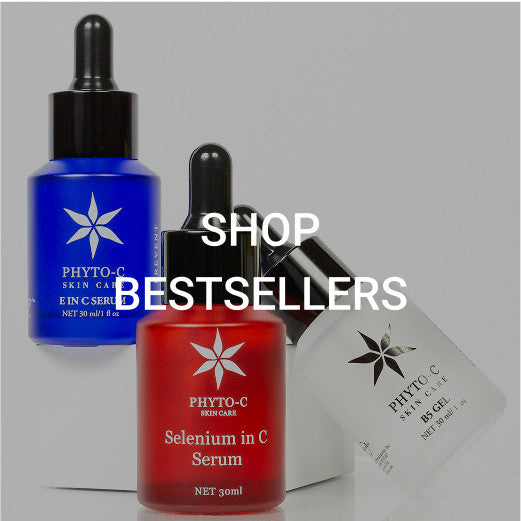
The Selenium in C Serum is a prime example: it pairs 1% retinol with 15% L-ascorbic acid, 1% vitamin E, 1% selenium (as L-selenomethionine), and bioflavonoids. This creates a triple antioxidant buffer — the vitamin C and vitamin E work synergistically to help neutralize free radicals, while selenium supports the skin's own enzymatic antioxidant defenses. The result is a system where retinol can function within a protective environment rather than working against oxidative stress.
Be cautious of formulas that list retinol without supporting antioxidants, or that package retinol in transparent containers or jars exposed to air. These formulas may contain retinol on the label but deliver very little active ingredient to the skin.
Frequently Asked Questions
How long does retinol take to show results?
Most users begin to notice visible improvements in skin texture and tone after 8 to 12 weeks of consistent use. Cell turnover cycles are approximately 28 days, so retinol needs multiple cycles to produce cumulative visible changes. Fine lines and hyperpigmentation may take 12 to 24 weeks to show significant improvement in appearance.
Can I use retinol every night or just a few times a week?
Beginners should start with 2 to 3 nights per week and gradually increase frequency over 4 to 6 weeks. Once tolerance is established, nightly use is appropriate for most skin types. If redness, flaking, or tightness persists beyond the initial adjustment period, reduce frequency and layer with a hydrating product such as B5 Gel to support the skin's moisture barrier.
What is the difference between retinol 0.5% and 1%?
Retinol at 0.5% is the highest concentration in the beginner range, offering meaningful efficacy with lower risk of irritation. Retinol at 1% is an intermediate-to-advanced concentration that delivers stronger visible results but requires established tolerance. Retinol 0.5% is an excellent starting point; users can graduate to products like SuperHeal O-Live Serum (1% retinol) once their skin has adapted.
Can retinol be combined with vitamin C in the same routine?
Yes. Despite the persistent myth that retinol and vitamin C are incompatible, they address different mechanisms and can complement each other effectively. Phyto-C formulates them together in the same product — Selenium in C Serum contains both 15% L-ascorbic acid and 1% retinol. For those who prefer to layer separately, apply a pure L-ascorbic acid serum like Serum Fifteen or E in C Lite in the morning and retinol at night.
Why does retinol cause peeling and how do I minimize it?
Retinol promotes faster renewal of surface skin cells, which means older cells are shed more rapidly than they normally would be. This manifests as dryness, flaking, or mild peeling — often called "retinization." It is temporary and typically resolves within 2 to 4 weeks. To minimize it, start at a lower frequency, apply to fully dry skin, and follow with a ceramide-rich moisturizer like SuperHeal O-Live Cream or a hydrating layer like HYPER Hydrate with niacinamide and hyaluronic acid.
Retinol remains one of the most well-studied and effective topical ingredients for helping improve the visible signs of aging, uneven tone, and textural irregularities. Developed with the scientific rigor that comes from Dr. Mostafa Omar's NCI-supported antioxidant research, Phyto-C's retinol formulations are designed for both efficacy and stability. Explore the range — from the approachable Retinol 0.5% to the advanced multi-active systems like Selenium in C Serum and SuperHeal O-Live Serum — to find the right entry point for your skin.
 Next Post